A concentrated fruit syrup is the flavour layer of a drink. It is a sweetened flavour concentrate sold in a sealed bottle, and it is what turns a plain tea base into a strawberry drink, a lychee drink or a winter melon drink. Happypopper stocks ten flavours in 5kg bottles at RM 44.50 or RM 47.50 Ex Tax, which works out at RM 8.90 to RM 9.50 per kilogram, plus two longan honey syrups in 3kg bottles.
The short version
- Ten B&B flavours in 5kg bottles: seven at RM 44.50 and three at RM 47.50 Ex Tax, sold four bottles to a carton.
- Per kilogram that is RM 8.90 or RM 9.50, which is the number to compare against, not the bottle price.
- Strawberry syrup, lychee syrup, peach syrup, mango syrup and passion fruit syrup are the five that move fastest on a Malaysian menu.
- Winter melon is the odd one out. It is not a fruit drink at all in the Taiwanese sense, and it is the flavour most often bought as a signature rather than an add-on.
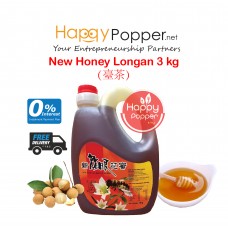
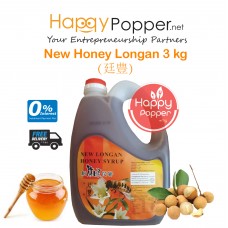
- Two longan honey syrups sit in the same category at RM 19.50 and RM 35.80 for 3kg. We report both prices and we do not guess why they differ.
- One carton of any flavour clears the RM 150 free delivery threshold. A single bottle does not.
Every bubble tea, every fruit tea and almost every iced drink sold in Malaysia is built in layers. There is a tea base, a sweetener, a flavour and a topping. Shop owners tend to think hardest about the tea and the topping, because those are the two the customer can see. The flavour layer is the one that quietly decides whether the drink tastes like the picture on the menu board, and in a commercial kitchen that layer is almost always a concentrated fruit syrup.
This guide covers the twelve products in the Concentrated Fruit Flavoured Syrup Series at Happypopper. It sets out what each one costs per kilogram, which flavours actually earn their shelf space in a Malaysian shop, and how to cost a fruit syrup properly before you commit to a carton. It is written for people buying for a business, not for people making syrup at home. The series sits inside the wider F&B drinks and topping range alongside the powders, toppings and bases it is normally ordered with.
What is a concentrated fruit syrup, and how is it different from a cordial or a puree?
A concentrated fruit syrup is a sweetened, flavoured liquid designed to be added to a drink in a small measured amount. The word that matters is concentrated. You are not buying a ready to drink product, you are buying flavour in a dense, pourable form, and the shop dilutes it into the finished cup.
Five things in the same aisle get confused with it, and buying the wrong one is a genuine cost mistake:
A cordial is usually a household product sold in 1L or 2L bottles for home dilution with water. It is designed around a domestic taste profile and a domestic price point. It will work in a jug of juice. It will not hold its flavour once you put it against a strong brewed tea and a full cup of ice.
A fruit puree is fruit pulp, sometimes with sugar, sometimes without. A fruit purée brings texture and body as well as flavour, and it behaves very differently in a shaker. Purees are excellent in a smoothie and awkward in a clear iced tea, where the pulp separates and sits at the bottom of the cup.
A flavouring essence is flavour without sugar or body. It flavours but does not sweeten, so a shop using essence has to build the whole sweetness of the drink separately. Some are natural, some rely on flavoring compounds and artificial colors, and the label is the only way to tell.
A fruit preserve or jam is fruit held in sugar. Fruit preserves are thick enough to spoon and the sugar is there to help preserve the fruit rather than to sweeten a drink. They belong on bread, not in a cup.
A simple syrup is sugar and water with no fruit in it at all. It sweetens and nothing else. Fruit juice and fruit nectars sit at the opposite end again: they are drinks in their own right, not concentrates, and pouring fruit juice into a tea gives you a weak, watery cup rather than a flavoured one.
| Product | Contains fruit | Sweetens | Adds texture | Where it belongs |
|---|
| Concentrated fruit syrup | Yes, as concentrate | Yes | No | Bubble tea, fruit tea, soda, dessert drizzle |
| Cordial | Yes, dilute | Yes | No | Household jugs, not a commercial counter |
| Fruit puree | Yes, as pulp | Sometimes | Yes | Smoothies and blended drinks |
| Flavouring essence | No | No | No | Where sweetness is built separately |
| Fruit preserve or jam | Yes, whole pieces | Yes | Yes, heavily | Bread and pastry, not drinks |
| Simple syrup | No | Yes | No | Neutral sweetening only |
Comparison of the six liquid sweetener and flavour formats a Malaysian drink counter is likely to be quoted on.
One naming note before we move on. American suppliers label this same category a flavored syrup, British and Malaysian ones write flavoured, and a homemade version is usually called a fresh fruit syrup. All three phrases point at overlapping but not identical things, so read the pack size and the ingredient list rather than the word on the front.
A concentrated syrup sits in the middle of that list. It carries flavour, sweetness and colour in one pour, which is why it is the format most commercial drink counters standardise on. If you want to control sweetness and flavour independently, the usual approach is a neutral fructose syrup for the sweetness and a fruit syrup for the flavour. That two bottle setup is very common behind a Malaysian counter.
In the trade this format is usually just called a bubble tea syrup, because bubble tea is where most of it ends up in Malaysia. The name undersells it. The same concentrated syrup runs a soda menu, a mocktail list, a shaved ice counter and a dessert station equally well. A cafe that only thinks of it as a bubble tea syrup tends to leave money on the table.
What does fruit syrup cost per kilogram in Malaysia?
Bottle prices are what suppliers advertise. Cost per kilogram is what you actually pay. Here is the full series as listed on 19 August 2026, all prices Ex Tax and subject to change.
| Product | Code | Size | Price (Ex Tax) | Per kg | Carton |
|---|
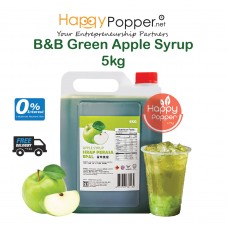
| B&B Concentrated Fruit Syrup Green Apple | BT-SY128 | 5kg | RM 44.50 | RM 8.90 | 4 btl, RM 178.00 |
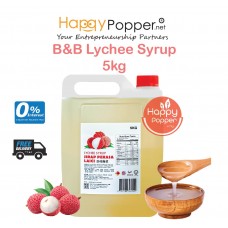
| B&B Concentrated Fruit Syrup Lychee | BT-SY130 | 5kg | RM 44.50 | RM 8.90 | 4 btl, RM 178.00 |
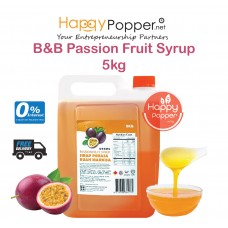
| B&B Concentrated Fruit Syrup Passion Fruit | BT-SY134 | 5kg | RM 44.50 | RM 8.90 | 4 btl, RM 178.00 |
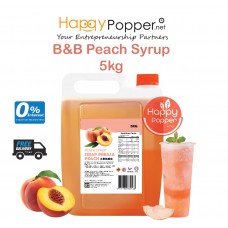
| B&B Concentrated Fruit Syrup Peach | BT-SY132 | 5kg | RM 44.50 | RM 8.90 | 4 btl, RM 178.00 |
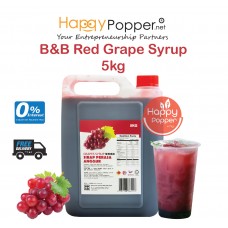
| B&B Concentrated Fruit Syrup Red Grape | BT-SY129 | 5kg | RM 44.50 | RM 8.90 | 4 btl, RM 178.00 |
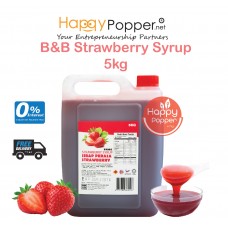
| B&B Concentrated Fruit Syrup Strawberry | BT-SY131 | 5kg | RM 44.50 | RM 8.90 | 4 btl, RM 178.00 |
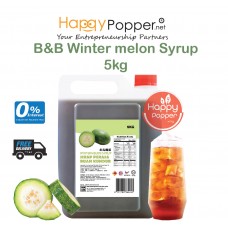
| B&B Concentrated Fruit Syrup Winter Melon | BT-SY135 | 5kg | RM 44.50 | RM 8.90 | 4 btl, RM 178.00 |
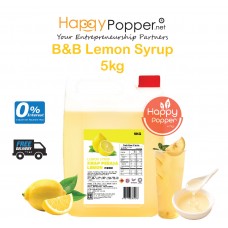
| B&B Concentrated Fruit Syrup Lemon | BT-SY127 | 5kg | RM 47.50 | RM 9.50 | 4 btl, RM 190.00 |
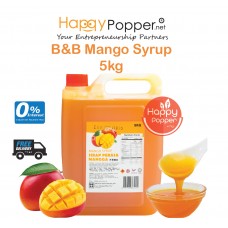
| B&B Concentrated Fruit Syrup Mango | BT-SY133 | 5kg | RM 47.50 | RM 9.50 | 4 btl, RM 190.00 |
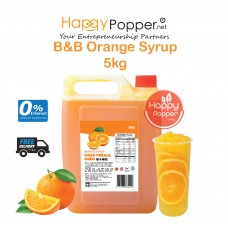
| B&B Concentrated Fruit Syrup Orange | BT-SY126 | 5kg | RM 47.50 | RM 9.50 | 4 btl, RM 190.00 |
| New Longan Honey Syrup | BT-SY014 | 3kg | RM 19.50 | RM 6.50 | 10 btl, RM 195.00 |
| New Longan Honey Syrup | BT-SY006 | 3kg | RM 35.80 | RM 11.93 | 10 btl, RM 358.00 |
Prices observed on happypopper.net on 19 August 2026, Ex Tax, and subject to change. Carton figures are the listed unit price multiplied by the stated pack count.
Two things in that fruit syrup price table are worth saying plainly rather than burying.
First, seven of the ten flavours sit at RM 44.50 and three sit at RM 47.50. Lemon, mango and orange are the three that carry the higher price. Happypopper has not published a reason for that split, so we are not going to invent one. If you are costing a menu, treat it as two price bands and plan around it.
Second, and more usefully, the flavour price is not the number that decides your drink cost. A RM 0.60 per kilogram difference between the two bands is small compared with what your recipe weight does to the maths. That is the next section.
How do you cost a fruit syrup per cup?
This is the calculation most shops do wrong, and it is not complicated. It has three inputs.
Input one: your per kilogram price. From the table above, RM 8.90 or RM 9.50 for the 5kg bottles. Always convert to per kilogram before comparing suppliers, because bottle sizes across the market are not standardised and a cheaper bottle is frequently a smaller bottle.
Input two: your own recipe weight. Weigh what your staff actually pour for one cup, in grams, on a kitchen scale, three times, and take the average. Do not use a number from a supplier sheet and do not use a number from a video. Every shop pours differently and the only figure that costs your menu correctly is the one from your own counter. We are not going to publish a ratio here, because the honest answer is that it depends on your recipe and your cup size.
Input three: the arithmetic. Cost per cup equals per kilogram price divided by 1,000, multiplied by your gram weight. At RM 8.90 per kilogram, every gram of fruit syrup costs you RM 0.0089. Multiply that by your measured pour and you have a real number you can defend in a menu costing. Do the same for every flavour on the board and you can see at a glance which drinks are carrying the menu and which are quietly costing you the amount of syrup you thought you were saving elsewhere.
Some operators prefer to think in cost per serving rather than cost per cup, particularly where one recipe fills two cup sizes. The arithmetic does not change, only the label on the number.
One note on units. These bottles are sold by weight, not by volume, so a 5kg bottle is not the same thing as a 5 liter bottle and the two are not interchangeable on a spec sheet. Compare weight to weight when you are quoting suppliers against each other.
Run that once and two things usually become obvious. One, the flavour layer is rarely the expensive part of a bubble tea. The tea base, the milk component and the toppings usually cost more per cup. Two, a heavy pour by an untrained staff member can double your syrup cost without anyone noticing, because nobody is weighing anything. A 5kg bottle disappearing faster than your sales suggest is the symptom.
Why does a fruit syrup recipe not scale to a shop counter?
Search for fruit syrup and most of what comes back is a fruit syrup recipe written for a home kitchen. Those recipes are good, and plenty of shop owners have tried one. They are the wrong tool for a business, and it is worth understanding exactly why before you decide to make your own.
The home method is roughly the same everywhere. Most recipes tell you to use fresh or frozen whole fruit. You cook the fruit down with about a cup of sugar and a small amount of water over medium heat, let it thicken, then strain out the fruit pulp and remove from heat.
Some add lemon juice for balance. Some use a thermometer to judge the finished syrup. Almost all of them end with an instruction to refrigerate the batch in an airtight bottle and use it up.
Four things break when you try to run a counter on that.
Consistency. Whole fruit is a variable ingredient. Ripe and unripe fruit carry different sugar levels, different acidic balance and different water content, so two batches cooked the same way do not taste the same. A customer who liked your strawberry drink last week will notice that this week's is different, and they will not tell you, they will just stop ordering it.
Using frozen fruit instead of fresh gets you past seasonality and past the worst of the price swings, and plenty of recipes suggest it. It does not fix the consistency problem, because frozen fruit still varies batch to batch and thawing changes the water content again.
Labour. Cooking, straining and cooling a fruit-based syrup is an hour of somebody's shift, repeated every few days, for a finished product you can buy at RM 8.90 per kilogram. Run the maths on the staff hour and the home batch stops looking cheap almost immediately.
Storage. A small kitchen batch is made without the additive and preservative system a commercial syrup carries, which is exactly why every home recipe ends with the refrigerator instruction. A shop cupboard is not a refrigerator, and a busy counter does not have the cold space to hold several open jars of homemade syrup alongside everything else it already has to keep cold.
Colour and clarity. Homemade fruit syrup made from cooked pulp is cloudy and fibrous. It looks like what it is. In a clear cup of iced tea, sitting next to a photo on the menu board, that difference is visible to the customer before they taste anything.
None of this makes the home method wrong. It makes it a different product for a different purpose. If you are building a small batch, handcraft cocktail programme or a tiki bar where every drink is made to order and the syrup is part of the story, cook it yourself and charge for the labour. If you are selling two hundred cups a day, buy the syrup finished.
Which fruit syrup flavours actually sell in a Malaysian drink shop?
Ten flavours is more than most shops need. A counter running ten open fruit syrup bottles has ten bottles ageing at once, and slow flavours are where money quietly sits. The realistic split looks like this.
The core four
Strawberry syrup is the flavour that sells in every format. Strawberry milk, strawberry green tea, strawberry soda, strawberry syrup poured over soft serve. If a shop is only opening one fruit bottle, strawberry syrup is almost always the one, and it is one of the few flavours customers ask for by name rather than picking off the board. It is also the most searched syrup flavour in Malaysia by a wide margin, which tells you something about demand in front of the counter as well as behind it. Order strawberry syrup as BT-SY131, 5kg, RM 44.50 Ex Tax.
Peach syrup is the tea partner. Peach syrup with black tea and peach syrup with oolong are two of the most reliable fruit tea sellers in the region, and peach is forgiving because it does not fight the tannin in a strong brew. BT-SY132, 5kg, RM 44.50 Ex Tax.
Lychee syrup is the local favourite that travels. Lychee reads as familiar to a Malaysian customer in a way that imported berry flavours do not. Lychee syrup works in tea, in soda and in a jelly-topped cup without needing to be explained on the menu board. BT-SY130, 5kg, RM 44.50 Ex Tax.
Passion fruit syrup is the sharp one. It is the flavour shops reach for when a menu is getting too sweet across the board, because the acidity cuts through. Passion fruit syrup pairs particularly well with green tea, and it is one of the two flavours that works best under a salted foam. BT-SY134, 5kg, RM 44.50 Ex Tax.
The supporting flavours
Mango syrup (BT-SY133, RM 47.50) is a strong seller in a smoothie or a thick blended drink, where the body of a mango syrup carries better than a lighter flavour would. Mango syrup also holds against a milk base, which not every fruit flavour manages. That makes it the sensible second choice for a shop that wants two fruit-and-milk drinks on the board rather than one.
Green apple (BT-SY128, RM 44.50) and red grape (BT-SY129, RM 44.50) are soda and mocktail flavours more than tea flavours.
Lemon (BT-SY127, RM 47.50) and orange (BT-SY126, RM 47.50) are the two that most often end up in a cafe or a restaurant rather than a bubble tea shop. They sit naturally alongside a citrus soda or an iced tea service.
Flavours this range does not cover
Ten flavours is a focused range, not a complete one, and it is more useful to say plainly what is missing than to let a buyer assume. There is no blueberry syrup in this series, and no raspberry, blackberry, cranberry, pineapple, banana or kiwi. There is no grenadine, no mint syrup, and no elderflower or blossom syrup either.
That is not an oversight. Those flavours belong mostly to the European cafe and cocktail traditions, and to lemonades rather than milk tea. The ten here are chosen around what a Malaysian bubble tea counter actually sells. If a flavour you need is not on the list, ask us and we will tell you what we have rather than leaving you to guess.
A sensible opening range for a new shop is four flavours, not ten. Add the fifth when a customer asks for it twice in a week.
What makes strawberry syrup the first bottle a Malaysian shop opens?
Of the ten fruit syrup flavours in this series, strawberry syrup is the one that behaves differently from the rest, and it is worth understanding why before you build a range around anything else.
Most fruit flavours are single-format flavours. Green apple belongs in soda. Peach belongs in tea. Mango belongs in a blender. Strawberry syrup is the only bottle in the range that carries all four formats at once, and that is the entire commercial case for it.
Where strawberry syrup earns its shelf space
With milk. Strawberry milk is the drink you sell to the customer who does not drink tea. Every bubble tea shop needs at least one of those on the board, and strawberry syrup is a low cost way to have one.
With green tea. Strawberry green tea is an easy first fruit tea for a customer who has never ordered one, because the flavour is familiar enough that nobody has to explain it.
With soda. A strawberry soda costs very little to build and photographs well, which makes it a natural fit for an opening promotion or a seasonal board.
Over dessert. Strawberry syrup drizzled over soft serve or a shaved ice bowl turns a plain dessert into a named menu item without any extra equipment on the counter. If you are still choosing the equipment, the machine range covers the shavers and soft serve units these toppings are built for.
What strawberry costs to run
BT-SY131 is RM 44.50 Ex Tax for 5kg, which is RM 8.90 per kilogram, and a carton of four is RM 178.00 Ex Tax. That sits in the lower of the two price bands in this series. The flavour that does the most work on a Malaysian menu is also one of the cheaper bottles on the shelf, which is unusual and worth taking advantage of.
One practical warning. Because strawberry syrup feeds four different drinks, it is the bottle that empties first and the one most likely to run out in the middle of a busy afternoon. If you hold one bottle of everything else, strawberry is the single flavour worth keeping a spare of.
What is winter melon tea, and why does it need a syrup rather than a fruit?
Winter melon is the flavour in this series that behaves least like the others, and it is worth its own section.
Winter melon tea, dong gua cha, is a Taiwanese drink built on winter melon sugar, which is winter melon simmered down with sugar until it caramelises into a dark, deep, almost molasses-like block or syrup. The finished drink does not taste of melon in the way a mango drink tastes of mango. It tastes toasted and caramelly, with a light vegetal note underneath. That is the point of it.
This is why a shop cannot make winter melon tea by putting winter melon into a drink. The raw gourd is bland and watery. The flavour only exists after the long reduction, and reproducing that reduction in a shop kitchen is a multi hour job that no commercial counter has the burner time for.
That is exactly what a winter melon syrup is for. BT-SY135 puts the finished reduction in a 5kg bottle at RM 44.50 Ex Tax, the same price as the core fruit flavours. A shop adding winter melon syrup to the menu is not paying a premium for the specialty.
Commercially, winter melon tea is a signature rather than an add-on. Customers who like it order it specifically and repeatedly, and it does not overlap with anything else on a fruit menu. It also pairs well with the chewy toppings, which is why it turns up so often served with grass jelly or pudding in the cup. If you are looking for one flavour that gives a menu a genuine Taiwanese anchor rather than another berry, this is it.
How does longan honey syrup differ from the fruit syrups?
Two products in this category are not B&B fruit syrups at all. They are longan honey syrups in 3kg bottles, sold ten to a carton, and they belong to a different tradition.
Longan honey is a floral, warm, slightly smoky sweetener associated with longan flower nectar. In a Malaysian and Taiwanese drink context it turns up in longan honey tea and in longan and red date drinks. It also replaces plain sugar syrup where a shop wants a rounder, more aromatic sweetness.
It is a sweetener with character rather than a fruit flavour, and it is a common upgrade on a tea menu that already sells well.
The two listings differ in price by a wide margin:
| Product | Code | Size | Price (Ex Tax) | Per kg | Carton |
|---|
| New Longan Honey Syrup | BT-SY014 | 3kg | RM 19.50 | RM 6.50 | 10 btl, RM 195.00 |
| New Longan Honey Syrup | BT-SY006 | 3kg | RM 35.80 | RM 11.93 | 10 btl, RM 358.00 |
BT-SY006 is roughly 1.8 times the price of BT-SY014 for the same stated size and the same carton count. The two carry different brand markings on the listing. We are not going to explain that gap, because the reason is not confirmed. Guessing at a concentration difference or an origin difference in an article that a buyer might rely on would be worse than useless. If longan honey matters to your menu, ask us directly and compare the two before you commit to a carton, and we will tell you what we actually know about each one.
That is the honest position, and we would rather publish it than fill the space with something that sounds authoritative.
How does longan honey tea reach a menu?
Longan honey tea is the simplest way to put this product on a board. It is a tea base sweetened with longan honey in place of plain sugar syrup, served hot or iced, and it reads as a traditional drink rather than a novelty. The customer for it is the one who finds a standard milk tea too sweet and a plain tea too plain.
Two extensions follow naturally. Longan and red date is a familiar warm drink in Malaysia and needs nothing beyond the syrup and dried red dates. Longan honey over a green or oolong base gives you the iced version. Neither needs new equipment, and both come from one extra bottle behind the counter, which is the whole point of a sweetener upgrade rather than a new product line.
Where does fruit syrup sit in the four layers of a bubble tea cup?
It helps to see the whole build, because ordering fruit syrup without thinking about the other layers is how shops end up with a cupboard full of half-used bottles.
Sitting across the top of all four is the finishing layer, the milk foam or cheese foam that turns a RM 8 cup into a RM 12 cup. A fruit syrup underneath a salted cheese foam is one of the most reliable premium combinations on a Malaysian menu, and passion fruit or strawberry under foam are the two that most often work.
Order the layers together and you avoid the classic mistake of buying a beautiful flavour range and then discovering you have nothing to put it in. Choosing a syrup for bubble tea is not the same job as choosing one for a coffee bar. A bubble tea syrup has to survive a full cup of ice, a strong brewed base and a shake, and a lighter cafe syrup simply disappears in that environment.
What should a Malaysian buyer check before ordering fruit syrup in bulk?
A short fruit syrup checklist that saves money more often than it sounds like it should.
Convert everything to per kilogram first. A 700ml retail bottle and a 5kg commercial bottle are not comparable until you do. This is the single biggest source of bad purchasing decisions in this category.
Weigh your own pour before you order a carton. Four bottles of a flavour you have not costed is four bottles of guesswork.
Open four flavours, not ten. Range looks good on a menu board and looks bad on a stock sheet.
Order the carton, not the bottle, if you can move it. One carton of any 5kg flavour is RM 178.00 or RM 190.00 Ex Tax, and one carton of BT-SY014 longan honey is RM 195.00, so any full carton clears the RM 150 free delivery threshold on its own. A single 5kg bottle at RM 44.50 does not, so a single-bottle order carries delivery cost on top. If you only need one bottle, add it to an order of powders or toppings rather than sending it on its own.
Consolidate the delivery. Syrup is heavy. Whether you are running a counter in Kuala Lumpur, Petaling Jaya, Shah Alam, Johor Bahru, Ipoh or Penang, one consolidated delivery costs less than three small ones. Ask your fruit syrup supplier what else is going on the same lorry. Happypopper ships from Klang, Selangor, which puts the Klang Valley on a short run.
Check halal status per product before ordering. Halal-certified lines are available on selected products. Confirm the halal status of a specific product with us before ordering.
Which other layers of the cup does Happypopper cover?
This fruit syrup article is the flavour layer. The rest of the build has its own buying guide, and the categories are these:
Ordering across two or three of these at once is also how most counters get past the RM 150 free delivery threshold without over-buying any single item.
Frequently asked questions
What is concentrated fruit syrup used for?
Concentrated fruit syrup is used to flavour drinks in commercial volume. In Malaysia it goes into bubble tea, fruit tea, sodas, lemonades, mocktails, cocktails, slushes and shaved ice, and it is also drizzled over soft serve, yogurt and dessert plates. It carries flavour, sweetness and colour in a single pour, which is why drink counters standardise on syrups for drinks rather than on fresh fruit.
How much does fruit syrup cost in Malaysia?
At Happypopper the B&B concentrated fruit syrups are RM 44.50 or RM 47.50 Ex Tax for a 5kg bottle, which is RM 8.90 to RM 9.50 per kilogram. Cartons of four are RM 178.00 or RM 190.00 Ex Tax. Longan honey syrup in 3kg is RM 19.50 or RM 35.80 Ex Tax depending on the listing. Prices were checked on 19 August 2026 and are subject to change.
What is the difference between fruit syrup and fruit puree?
A fruit syrup is a sweetened flavour concentrate that pours clear and mixes into a drink without changing its texture. A fruit puree is fruit pulp, which adds body and thickness as well as flavour. Puree suits smoothies and blended drinks. Syrup suits iced teas, sodas and any drink that should stay clear in the cup.
Which fruit syrup flavour sells best for bubble tea?
Strawberry syrup, peach syrup, lychee syrup and passion fruit syrup are the four that move fastest on a Malaysian bubble tea menu. When you are choosing a syrup for bubble tea rather than for a cafe, pick flavours that stay recognisable against a strong tea base and a full cup of ice. Strawberry works across milk drinks, teas and sodas, peach is the strongest tea partner, lychee reads as familiar to local customers, and passion fruit provides the acidity that stops a sweet menu from tasting flat.
What does winter melon tea taste like?
Winter melon tea tastes caramelly and toasted rather than fruity, with a light vegetal note underneath. The flavour comes from winter melon simmered down with sugar until it darkens, not from the raw gourd, which is bland. It is a Taiwanese drink and it is usually sold as a signature item rather than as an add-on flavour.
Can I make winter melon tea without winter melon syrup?
Not practically in a shop. The flavour only develops during a long reduction of winter melon with sugar, which takes hours of burner time that a commercial drink counter does not have. A winter melon syrup such as BT-SY135 supplies the finished reduction in a 5kg bottle, which is why almost every shop selling winter melon tea buys it in this form.
What is longan honey syrup used for?
Longan honey syrup is used as an aromatic sweetener rather than a fruit flavour. It appears in longan honey tea, in longan and red date drinks, and as a replacement for plain sugar syrup where a shop wants a warmer, more floral sweetness. It is usually an upgrade on an existing tea menu rather than a new drink on its own.
Why are the two longan honey syrups priced differently?
The two listings, BT-SY014 at RM 19.50 and BT-SY006 at RM 35.80, are both 3kg and both sold ten to a carton, and they carry different brand markings. Happypopper has not published the reason for the price difference, so this article does not state one. Contact us to compare the two before ordering a carton.
How do I calculate the syrup cost per cup?
Divide the per kilogram price by 1,000 to get the cost per gram, then multiply by the gram weight your own staff actually pour for one cup. At RM 8.90 per kilogram, one gram costs RM 0.0089. Weigh your own pour three times and average it rather than using a figure from a supplier sheet, because pour weights vary between shops.
Is fruit syrup halal in Malaysia?
Halal-certified lines are available on selected products. Confirm the halal status of a specific product with us before ordering.
Where can I buy fruit syrup wholesale in Malaysia?
Happypopper is a fruit syrup supplier in Malaysia serving bubble tea shops, cafes, restaurants and dessert counters from Klang. The full range is listed in the Concentrated Fruit Flavoured Syrup Series on happypopper.net with live prices, and a full carton of any flavour clears the RM 150 free delivery threshold.
About the author. Derreck Chia Swee Kuan is the founder of Happypopper International Sdn Bhd, a wholesale food and beverage supplier based in Klang, Selangor. He has worked in F&B supply since 2013, supplying ingredients, packaging and equipment to Malaysian bubble tea shops, cafes, restaurants and dessert counters.
Prices, product codes and pack configurations in this article were observed on happypopper.net on 19 August 2026, are quoted Ex Tax, and are subject to change without notice. Check the live product page for the current price before ordering. Flavour and menu observations reflect general trade practice in the Malaysian drinks market and are offered as commercial guidance, not as a guarantee of results in any individual business. This article makes no nutrition, health or dietary claims about any product mentioned. Confirm the halal status of a specific product with us before ordering.


-01-228x228.jpg "Citrus Fructose Syrup 5kg (5btl/ctn) BT-SY149 - 柑橘果糖糖浆 5公斤")