By Derreck Chia Swee Kuan, Founder, Happypopper International Sdn Bhd. Last updated 19 August 2026. Prices checked 19 August 2026.
Sweet red bean, known in Malay as kacang merah, is the cooked, sweetened azuki bean topping behind ice kacang, red bean soup and red bean buns. Happypopper supplies it ready to serve in 1kg trade packs at RM 10.50 Ex Tax, alongside a sweet purple rice topping in 500g packs at RM 8.90, wholesale from its Klang factory.
TL;DR: Ice kacang draws around 4,400 searches a month in Malaysia and red bean another 2,900, with kacang merah adding 2,400 on the Malay side. Our Topping series covers the two workhorses: Sweet Red Bean 1kg (BT-SC023) at RM 10.50, RM 157.50 per carton of 15, and Sweet Purple Rice 500g (BT-SC024) at RM 8.90, RM 267.00 per carton of 30, Ex Tax, checked 19 August 2026. This guide covers what each topping is, where it earns money and the carton maths. Ask us in live chat before you order.
Ice kacang is searched around 4,400 times a month in Malaysia by Google keyword data checked August 2026, peaking at 6,600 in the July heat. Underneath the shaved ice, the bowl is built on toppings, and the first one every recipe lists is the sweet bean. It draws around 2,900 English searches a month, with kacang merah adding 2,400 more in Malay. That is the demand side. This guide covers the supply side: the two cooked, ready-to-serve toppings in our range and the maths behind them.
What is sweet red bean?
Sweet red bean is the azuki bean, cooked down with sugar until soft and glossy. Chinese dessert shops know it from red bean soup and tong sui, Malaysian stalls from ice kacang and ais batang, Japanese and Korean menus as the anko or pat that fills buns, mochi and bingsu. One cooked bean, four cuisines, which is why it sits on almost every dessert menu in the country in some form.
The naming needs one careful note. The dessert bean is the adzuki bean, also spelled azuki: the small legume from East Asia that botanists call Vigna angularis, a cousin of the mung bean and the soybean. Chinese menus call it hong dou. Among the types of beans on a Malaysian shelf, kacang merah can also mean the larger kidney bean used for savoury cooking, a different legume entirely, and dessert kitchens want the small one. Cooked whole, it tops ice and bowls. Simmered further and mashed, it becomes red bean paste, the smooth filling inside dorayaki, mooncakes, sesame balls and zongzi across Chinese and East Asian cuisine. Kitchens that make red bean paste in-house start from cooked adzuki beans, drain the beans, then mash and add sugar in stages. The shortcut is buying sweet red bean paste or whole sweetened beans ready-made.
The trade problem is prep. Dried kacang merah needs soaking, a long simmer or a pressure cooker run, and sweetening: a stove and a pair of hands for hours before service. Our Sweet Red Bean (BT-SC023) arrives already cooked and sweetened in a 1kg pack in the Topping series: open, portion, serve. For composition details on the pack, check the label and ask us in live chat before ordering.
What is sweet purple rice?
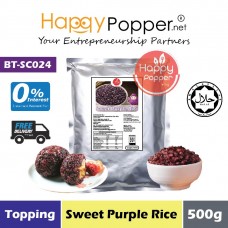
Sweet purple rice is cooked glutinous rice from the dark-grain family, sweetened and ready to spoon. Malaysians know the family through bubur pulut hitam, the black glutinous rice porridge. Bingsu cafes and Taiwanese dessert bars use the same purple grain as a chewy base layer under shaved ice, in milk toast and in warm dessert bowls close in comfort to a rice pudding. Our Sweet Purple Rice (BT-SC024) is the ready-to-serve version in a 500g pack. Whether it fits your pulut hitam bowl or your bingsu build, describe the dish in live chat and we will confirm the fit before you buy.
The business case is the same as the bean: glutinous rice is slow to cook and easy to scorch, and a ready topping turns a stove job into a scoop job. Pulut hitam alone draws around 2,900 searches a month, rising to 4,400 before Ramadan, when bubur pots run at every bazaar.
Where do these two toppings earn their keep?
- Ice kacang and ais batang stalls: red bean is the defining topping of the bowl, and the 1kg pack portions across a full day of service.
- Bingsu and Korean dessert cafes: pat bingsu is literally red bean shaved ice, and purple rice is the chewy layer under milk bingsu builds.
- Tong sui and dessert shops: red bean soup, bubur and mixed dessert bowls draw from both packs.
- Bakeries and drink bars: red bean fills pastry and tops buns, toast and milk drinks; purple rice thickens warm bowls and yogurt cups.
If you already run a shaved ice line, these packs sit beside the machine. Our ice shaver and crusher machines and the gula melaka syrup that finishes an ice kacang bowl come from the same catalogue. That is the point of buying from one supplier: machine, topping and syrup in one order.
How much do red bean and purple rice toppings cost in Malaysia?
Both packs, Ex Tax, prices checked 19 August 2026 and subject to change with live discounting:
| Product | Code | Pack | Price Ex Tax | Per carton |
|---|
| Sweet Red Bean | BT-SC023 | 1kg | RM 10.50 | RM 157.50 (15 pkt) |
| Sweet Purple Rice | BT-SC024 | 500g | RM 8.90 | RM 267.00 (30 pkt) |
Run the per-kilogram maths: the red bean works out to RM 10.50 per kg and the purple rice to RM 17.80 per kg at the checked prices, so cost your menu per portion before you commit. These are wholesale prices from direct factory supply with no distributor in between. We state that this structure puts our catalogue 50 to 70 percent below retail, explained on our why so cheap page. Either carton clears the RM 150 threshold for free delivery to Selangor and Kuala Lumpur.
Why does this shelf have two peak seasons?
Most of our food lines peak once a year. This shelf peaks twice. Ice kacang searches climb to 6,600 in the July heat, when shaved ice stalls run flat out, and pulut hitam climbs to 4,400 in March, when Ramadan bazaars put bubur on every table. Red bean sits under both curves, serving the cold bowl in one season and the warm one in the other.
The buying rule follows: count your cartons before June for the heat season and before February for the bazaar season. Hot-selling packs re-order from the factory when they sell out, and season-time is when that happens. Use Request Quote if a pack shows out of stock, and we will confirm availability and timing.
Why buy dessert toppings from a supplier instead of cooking in-house?
In-house cooking gives you control and a lower ingredient cost per kg, at the price of hours of low-skill stove time every day and batch-to-batch drift. The trade pack fixes the flavour at the factory and frees the stove. Most shops land in the middle: cook the signature item in-house, buy the standard toppings ready-made.
Happypopper is a registered Malaysian company with a physical factory, warehouse and collection point in Kapar, Klang, Selangor, a dessert topping supplier with a full F&B catalogue behind it, sold at wholesale prices. Customer service answers specification, stock and origin questions in live chat during office hours, Monday to Friday, 9:00 AM to 5:30 PM. Self-pickup from the Klang factory is free, and delivery rates by region are on our shipping fees page. The wider F&B drinks and topping range covers the syrups, powders and jellies the same counter buys.
The short version, and your next step
The bean and the rice are the two topping workhorses of the Malaysian dessert counter, with demand that peaks in July for ice and March for bubur. Budget RM 10.50 Ex Tax for the 1kg Sweet Red Bean (BT-SC023) and RM 8.90 for the 500g Sweet Purple Rice (BT-SC024), checked 19 August 2026. Trial a pack of each against your menu, then order the carton before the next peak.
Frequently asked questions
What is kacang merah in English?
Kacang merah is Malay for red bean, most often the azuki bean used in desserts. Cooked and sweetened, it becomes the topping in ice kacang, red bean soup, buns and bingsu. Our Sweet Red Bean (BT-SC023) is the ready-to-serve version in a 1kg trade pack at RM 10.50 Ex Tax.
Is sweet red bean the same as anko or pat?
They are the same bean family in different kitchens. Anko is the Japanese sweetened azuki paste, pat is the Korean equivalent on bingsu, and Malaysian and Chinese dessert shops serve the beans whole in ice kacang and tong sui. Texture and sweetness vary by preparation, so trial the pack against your recipe.
Is purple rice the same as pulut hitam?
They are close relatives. Pulut hitam is Malay for black glutinous rice, which cooks to a deep purple, and sweet purple rice toppings come from the same dark glutinous grain family. Recipes and grains vary by product, so tell us the dish you are making in live chat and we will confirm whether our pack fits it.
What desserts use sweet red bean?
Every classic red bean dessert in Malaysia draws from the same pack: ice kacang, ais batang, red bean soup and tong sui, bingsu, red bean buns and toast, mochi fillings and milk drinks. It is one of the few toppings that works in both cold and warm desserts, which is why it anchors the dessert counter across the year.
Do I still need to cook these toppings?
The packs are supplied cooked and sweetened, made to portion and serve. How you hold and serve them depends on your kitchen and the specific product, so check the pack label and ask us in live chat about handling for the pack you are ordering.
Are your toppings halal?
Halal-certified lines are available on selected products. Confirm the halal status of a specific product with us before ordering. Some of our food lines are manufactured in Malaysia and some in China, and we will tell you the origin of any product before you order.
How much red bean topping does an ice kacang stall need?
Portion sizes vary by bowl and by stall, so run your own numbers: weigh the red bean you serve per bowl, multiply by your daily bowls, and divide into the 1kg pack. Then order the carton of 15 that covers your busiest week. Ask in live chat if you want help sizing a first order.
Can I buy dessert toppings borong for a chain or bazaar stall?
Yes. Wholesale dessert toppings are our trade format: packs sold individually through the cart and packed 15 or 30 to a carton. For repeat or multi-carton orders, ask in live chat and the team will advise the best arrangement for your usage.


-2-228x228.jpg "Sweet Red Bean 500g (30pkt/ctn) BT-SC023 - 蜜红豆 500克")