By Derreck Chia Swee Kuan, Founder, Happypopper International Sdn Bhd. Last updated 19 August 2026. Prices checked 19 August 2026.
A taro ball, called yu yuan in Chinese, is the small chewy dessert ball from Taiwan made of mashed taro and starch, served in tong sui, shaved ice and bubble tea. Happypopper supplies frozen taro balls in 1kg trade packs from RM 16.80 Ex Tax, in taro, sweet potato and matcha flavours plus mini sizes, wholesale from its Klang factory.
TL;DR: Taro ball and taro balls each draw around 1,000 searches a month in Malaysia, and the yam-versus-taro question adds 720 more. Our Taro Balls series runs five frozen 1kg packs: taro, sweet potato and matcha at RM 19.80, and mini taro and mini sweet potato at RM 16.80, all 20 packs per carton, Ex Tax, checked 19 August 2026. This guide covers what taro balls are, the yam confusion, from-scratch versus frozen, and the carton maths. Ask us in live chat before you order.
Walk any Malaysian dessert street and the chewy little balls are everywhere: on shaved ice, in warm tong sui, at the bottom of a milk tea. Google keyword data for Malaysia, checked August 2026, puts taro ball and taro balls at around 1,000 searches a month each, with a mid-year spike toward 2,400, and yam vs taro at another 720. The dish crossed from Taiwan and never left.
This guide covers the supply side: what the balls actually are, why Malaysians argue about the word yam, whether to make or buy, and what a 1kg pack and a carton cost today.
What are taro balls?
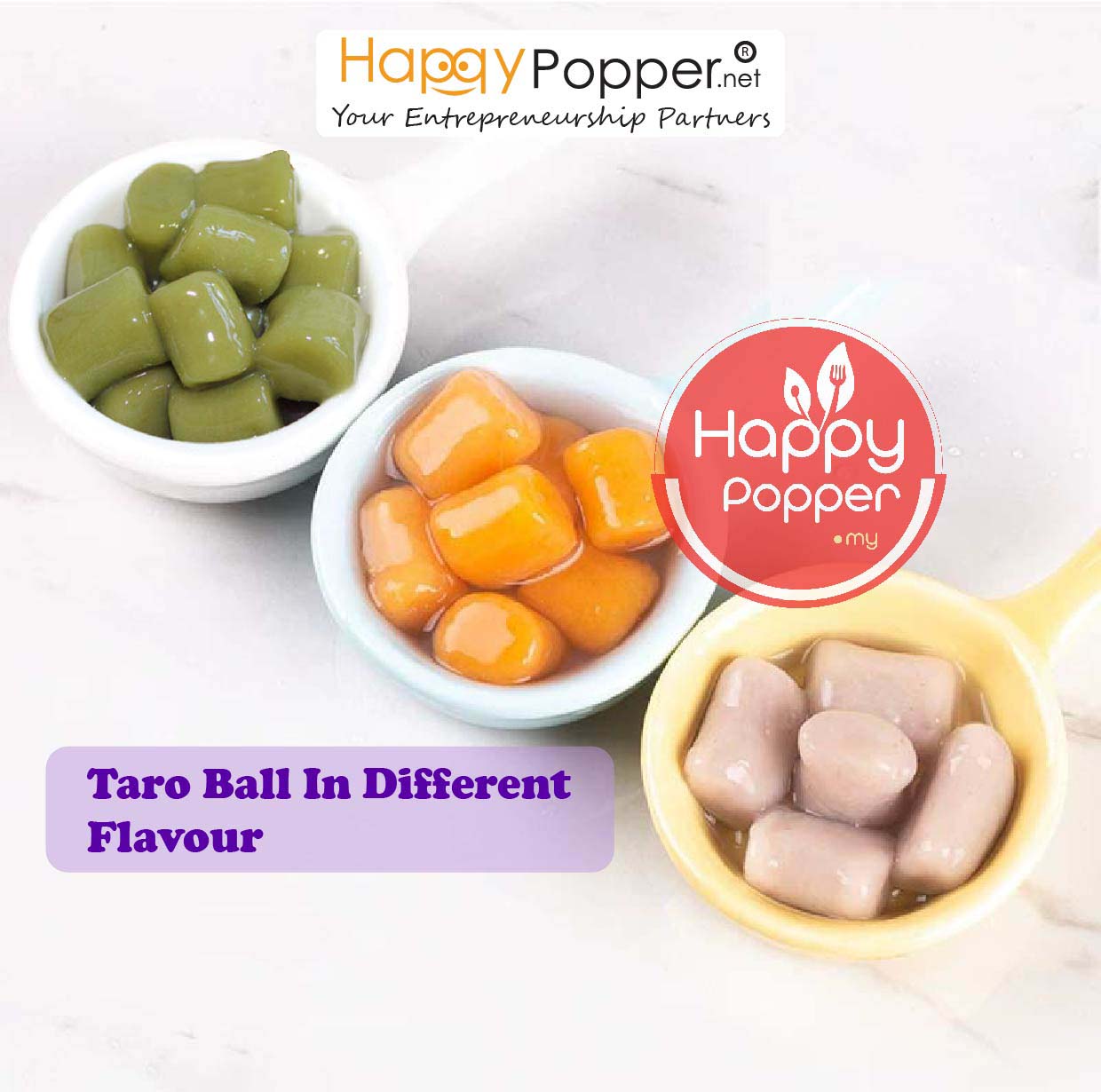
Taro balls are a Taiwanese dessert: mashed taro worked into a dough with starch, rolled, cut and cooked into small balls with a springy, chewy bite, the texture Taiwanese eaters call QQ. The famous version comes from Jiufen, the hillside town where the balls became a signature dish, and the format spread across Asia with the bubble tea wave. Taro and sweet potato balls are the classic two-tone pairing. The sweet potato version is the orange sibling from the same dough family, made from yellow or orange sweet potatoes, and flavoured versions like matcha extend the colour range on a dessert bowl. It is the same dessert logic that carries red bean from anko buns to pat bingsu: one base, many kitchens.
They anchor a taro dessert menu hot or cold. Warm, they sit in sweet soups, tong sui and the classic brown sugar ginger syrup. Chilled, they top shaved ice and bingsu, where the chew plays against the ice. Bowls pair them with grass jelly, sago and red beans, and in drinks they ride alongside boba pearls as a premium topping that customers can see through the cup.
Is taro the same as yam?
In Malaysia, mostly yes by habit and no by botany. Malaysians and Singaporeans call taro yam: yam cake, yam basket and yam paste desserts are all made from taro, the purple-flecked root Malay speakers call keladi. Botanically, true yams are a different family of tubers, and in American usage yam often means orange sweet potato, which confuses things further. When a menu in this region says yam, it almost always means taro.
One more mix-up worth clearing: ube, the vivid purple ingredient from Filipino desserts, is a purple yam, not taro, and the purple sweet potato is a third lookalike that is neither. Taro flesh is pale with purple flecks and a nutty, subtly sweet flavour, and that is what a taro ball is built on. If you are matching a recipe or a supplier listing, match the botanical ingredient, not the word yam on the label.
From-scratch taro balls versus frozen: the honest comparison
A homemade taro balls recipe is simple to describe. Steam taro, mash it, knead in tapioca starch or sweet potato starch with sugar. Roll ropes, cut into small pieces, and boil until the chewy balls float. Some kitchens leave taro chunks in the dough, and some swap in glutinous rice flour or cornstarch; every shop has its ratio. Dessert kitchens that make their own do it for good reasons. Done daily at shop volume, the texture drifts with the taro harvest, the dough takes a pair of hands for hours, and every flavour and size multiplies the prep.
The frozen trade pack settles the same three problems it settles everywhere else in our catalogue. Consistency: the chew is fixed at the factory, so every bowl serves the same QQ, whoever is on shift. Labour: the rolling shift disappears, and service becomes a cook-from-frozen step. Costing: a fixed price per kg makes the per-bowl topping cost calculable. The honest caveat stands too: frozen brands vary, so trial one pack against your own standard before you commit to a carton.
Which pack fits which menu?
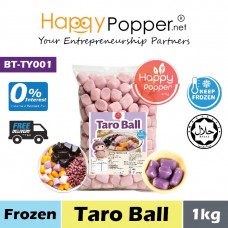
- Taro (BT-TY001): the signature flavour and the anchor of a mixed dessert bowl.
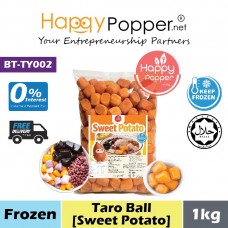
- Sweet potato (BT-TY002): the colour and flavour contrast that makes the classic two-tone Jiufen-style serving.
- Matcha (BT-TY003): the green third colour for cafes building an Instagram-friendly bowl.
- Mini taro and mini sweet potato (BT-TY004, BT-TY005): the drink-friendly size for bubble tea, where small balls ride a straw better, and for topping bingsu without overloading the spoon.
A working shelf for a dessert shop is usually two or three of these: the taro and sweet potato pair for bowls, and a mini pack if drinks are on the menu. All five are frozen 1kg packs, 20 to a carton, so the mix-and-match maths stays simple.
How much do frozen taro balls cost in Malaysia?
The full series, Ex Tax, prices checked 19 August 2026 and subject to change with live discounting:
| Product | Code | Pack | Price Ex Tax | Per carton (20) |
|---|
| Frozen Taro Ball (Taro) | BT-TY001 | 1kg | RM 19.80 | RM 396.00 |
| Frozen Taro Ball (Sweet Potato) | BT-TY002 | 1kg | RM 19.80 | RM 396.00 |
| Frozen Taro Ball (Matcha) | BT-TY003 | 1kg | RM 19.80 | RM 396.00 |
| Frozen Mini Taro Ball (Taro) | BT-TY004 | 1kg | RM 16.80 | RM 336.00 |
| Frozen Mini Taro Ball (Sweet Potato) | BT-TY005 | 1kg | RM 16.80 | RM 336.00 |
At RM 19.80 per kg for the full-size flavours and RM 16.80 for the minis, a small ladle of topping costs cents per serving; weigh your standard portion and run the per-bowl maths for your own menu. These are wholesale prices from direct factory supply with no distributor in between. We state that this structure puts our catalogue 50 to 70 percent below retail, explained on our why so cheap page. Any carton clears the RM 150 threshold for free delivery to Selangor and Kuala Lumpur.
Why buy frozen taro balls from a supplier instead of a marketplace listing?
Like every frozen line we carry, the seller is part of the product. Frozen taro balls need an unbroken cold chain from the warehouse freezer to your kitchen. A frozen taro ball supplier with its own warehouse can answer origin, handling and stock questions before you pay, not after.
Happypopper is a registered Malaysian company with a physical factory, warehouse and collection point in Kapar, Klang, Selangor, supplying the wider F&B frozen range. The dessert counter staples come from the same catalogue: the red bean and purple rice toppings that share the bowl, and the bingsu machines that shave the ice under it. Customer service answers questions in live chat during office hours, Monday to Friday, 9:00 AM to 5:30 PM. Self-pickup from the Klang factory is free, and delivery rates by region are on our shipping fees page.
The short version, and your next step
Taro balls are the chewy signature of the Taiwanese dessert wave, and in Malaysia the demand curve is steady with a mid-year peak. Budget RM 19.80 Ex Tax per 1kg pack for taro, sweet potato or matcha, and RM 16.80 for the minis, 20 packs per carton, checked 19 August 2026. Trial a pack against your menu, settle your flavour mix, then order the carton.
Frequently asked questions
What are taro balls made of?
Traditionally, mashed taro worked with a starch such as tapioca or sweet potato starch, which gives the chewy QQ texture. Exact composition varies by product, so check the pack label for the item you are buying and ask us in live chat about the specific pack before ordering.
Is taro the same as yam in Malaysia?
In everyday Malaysian usage, yes: yam on a local menu almost always means taro, the root called keladi in Malay. Botanically they are different plants, and in American usage yam often means sweet potato. Ube, the Filipino purple yam, is different again. Match the ingredient, not the word.
How do you cook frozen taro balls?
They are made to cook straight from frozen, and directions vary by product, so follow the pack label for the item you buy. Ask us in live chat about the pack you are ordering if anything on preparation is unclear.
What is the difference between regular and mini taro balls?
Size and use. The full-size balls (RM 19.80 Ex Tax per 1kg) anchor dessert bowls, tong sui and shaved ice, while the minis (RM 16.80) suit drinks and lighter toppings, where a smaller ball rides a straw and spreads further per serving. Many shops run one of each.
What desserts use taro balls?
Taiwanese-style mixed dessert bowls, warm tong sui and sweet soups, shaved ice and bingsu, bubble tea and milk tea toppings, and grass jelly combinations. The two-tone taro and sweet potato pairing is the classic Jiufen-style serving that most menus copy.
Are your taro balls halal?
Halal-certified lines are available on selected products. Confirm the halal status of a specific product with us before ordering. Some of our food lines are manufactured in Malaysia and some in China, and we will tell you the origin of any product before you order.
Can I buy taro balls borong for a dessert shop or chain?
Yes. Wholesale frozen taro balls are our trade format: 1kg packs sold individually through the cart and packed 20 to a carton for shop and chain volume. For repeat or multi-carton orders, ask in live chat and the team will advise the best arrangement for your usage.
Do you supply bubble tea shops?
Yes. The mini taro ball packs are the drink-friendly size, and the full range serves the dessert side of the same counter. Order through the cart, and the RM 150 free delivery threshold for Selangor and Kuala Lumpur applies to any mixed order across our catalogue.